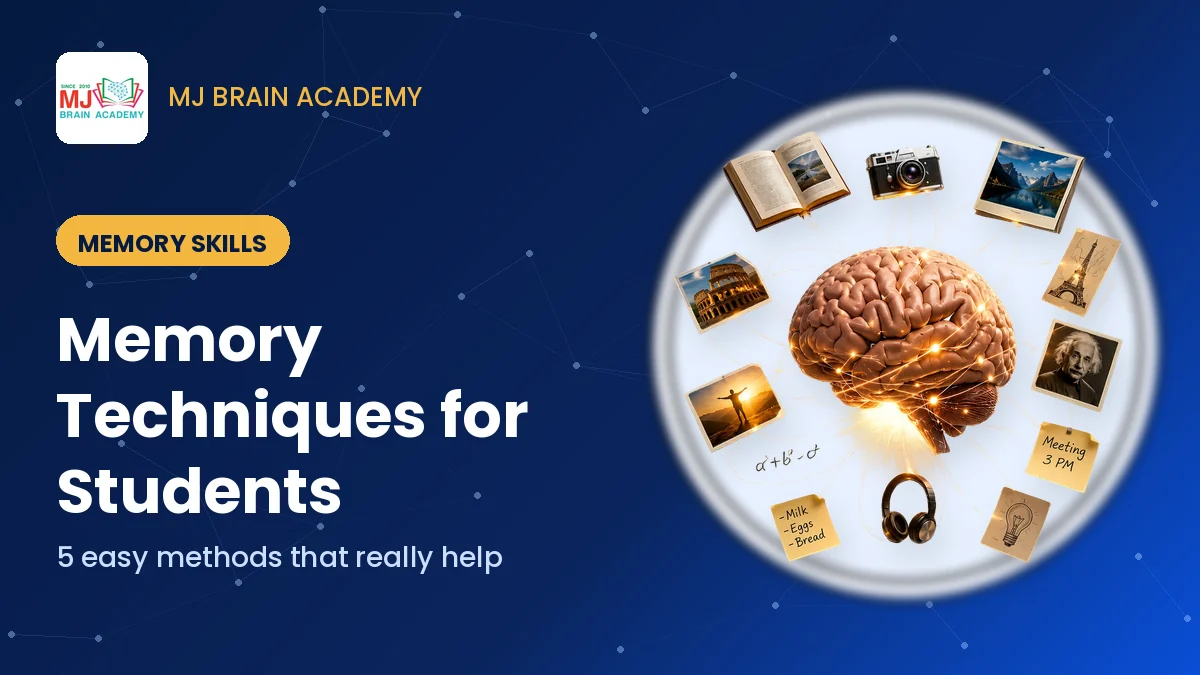
"I read it many times, but I forgot it in the exam." Does this sound familiar? Many students believe they have a weak memory, but memory is a skill that can be trained. In this guide, MJ Brain Academy explains what photographic memory really means and shares five simple techniques for students.
Is photographic memory real?
A true photographic memory, where a person can recall a page like a photo, is extremely rare. What we teach in a photographic memory course is a set of techniques that use pictures, stories and places to help the brain store information in a way it can easily find later.
The result feels "photographic" because you learn to see information in your mind instead of just repeating it.
Method 1: Image linking
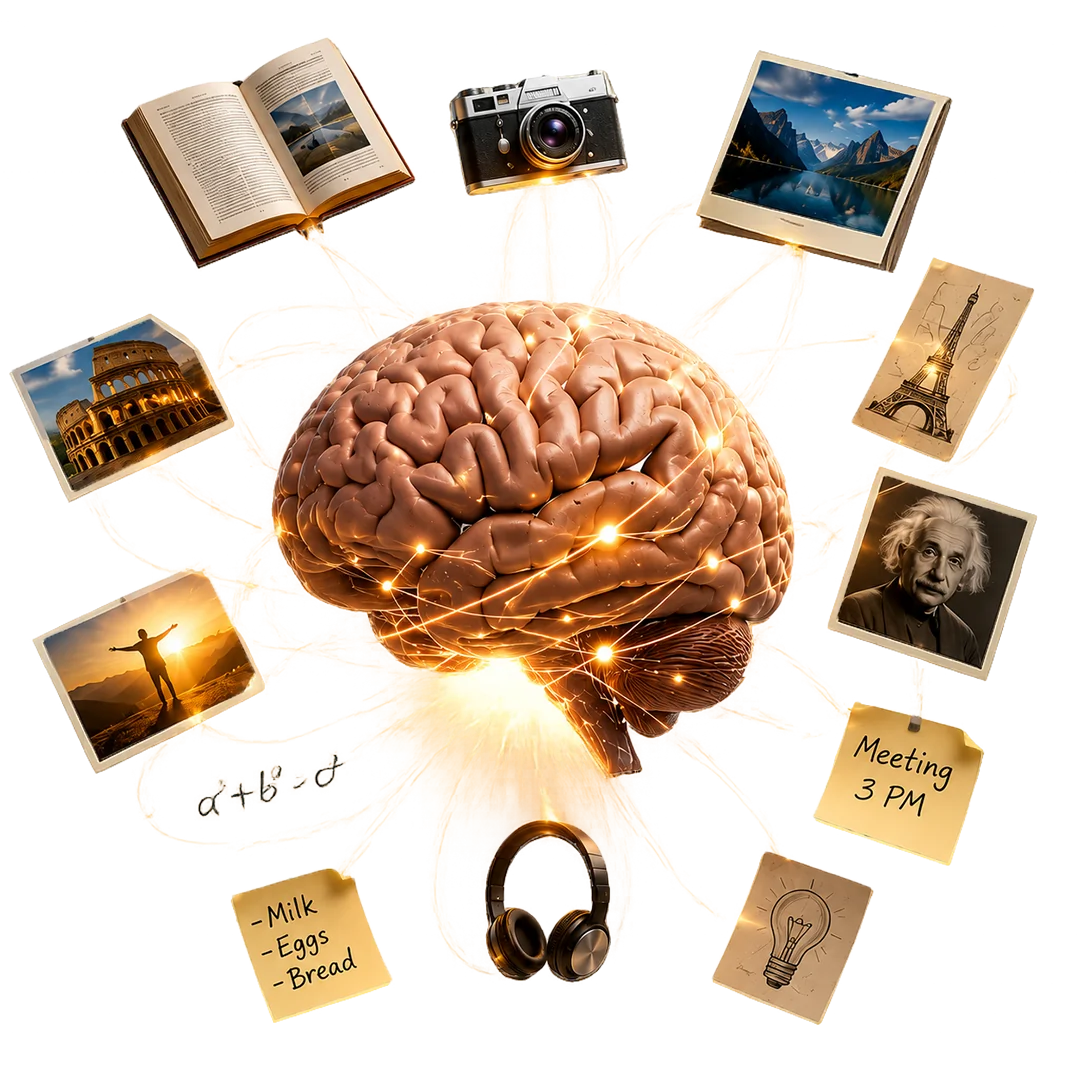
Turn each thing you want to remember into a clear, funny picture and link it to the next one. To remember milk, eggs and bread, imagine a giant egg wearing a bread hat and swimming in a pool of milk. The stranger the picture, the easier it is to remember.
Method 2: The story method
Join facts into a short story. To remember the order of events in a history chapter, make one story where each event is a character doing the next action. A story gives your brain a path to follow, so you remember the whole chain instead of single points.
Method 3: Mind mapping
Write the main topic in the centre of a page. Draw branches for sub-topics and add small pictures and colours. A mind map shows the whole chapter on one page, which makes revision quick and easy.
Method 4: The memory palace (journey method)
Think of a place you know very well, like your home. Walk through it in your mind and "place" what you want to remember at each spot: the first point on the door, the second on the sofa, the third on the TV. To recall, walk through the house again in your mind.
Method 5: Active recall and spaced revision
Seeing a topic again and again is not the same as remembering it. After reading, close the book and try to write what you remember. Then revise after one day, three days and seven days. This tells your brain that the information is important.
A simple 10-minute daily practice plan
- 3 minutes – pick 8 to 10 words or facts and link them with pictures or a story.
- 3 minutes – close your eyes and recall them in order.
- 4 minutes – make a small mind map of one topic you studied today.
Common mistakes to avoid
- Only re-reading notes again and again
- Cramming everything on the night before the exam
- Skipping sleep, which is when the brain stores memories
- Trying to remember without understanding the topic
- Studying with phone notifications on
Photographic memory training at MJ Brain Academy
The Photographic Memory course at MJ Brain Academy teaches image linking, the story method, mind mapping and visualisation through guided practice. If you also want to read faster, see our article on Quantum Speed Reading.
Frequently asked questions
Can kids learn memory techniques?
Yes. Children enjoy picture and story techniques. Start with small lists and short stories.
Do these techniques work for exams?
They help you remember facts, formulas and keywords. You still need to understand the subject.
How long does it take to see results?
Many students feel a difference after a few weeks of regular practice, but it differs from child to child.
Is photographic memory the same as a good memory?
Not exactly. A true photographic memory is very rare. A well-trained memory is something every student can build.