Every child learns in a different way. Some learn by seeing, some by listening and some by doing. The DMIT test is a popular tool that parents and counsellors use to understand a child's learning style and natural strengths. In this guide, MJ Brain Academy explains what DMIT is, how a DMIT software report is made and, most importantly, how to use it in a sensible way.
What is the DMIT test?
DMIT stands for Dermatoglyphics Multiple Intelligence Test. Dermatoglyphics is the study of fingerprint patterns. The idea behind DMIT is that fingerprint patterns form before birth, at the same time as the brain develops, so they can be used to guess a person's natural strengths.
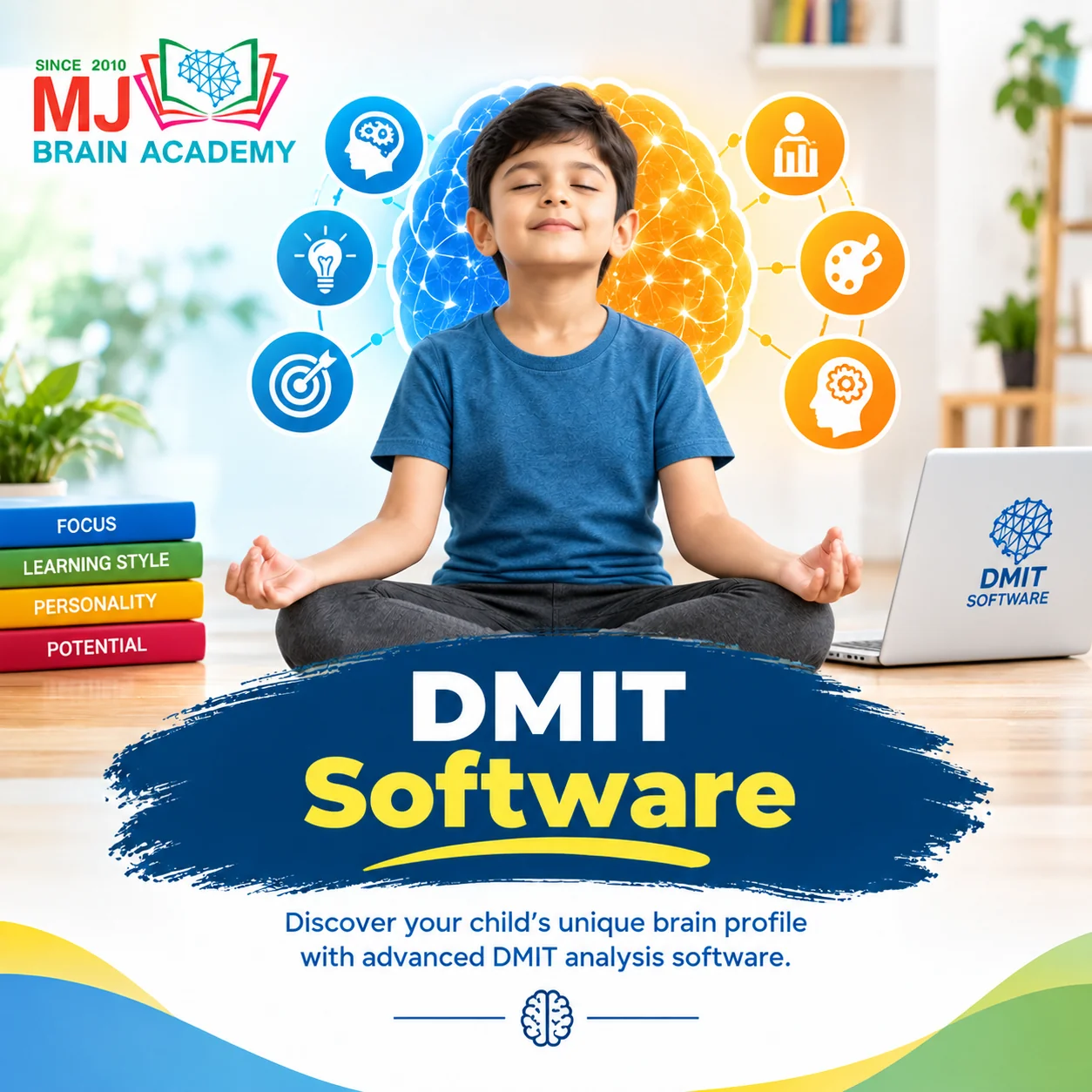
DMIT software scans the fingerprints, studies the patterns and creates a report about learning style, multiple intelligences and personality tendencies.
How does the DMIT test work?
- Fingerprint scan – all ten fingers are scanned on a small device. It is quick and painless, like unlocking a phone.
- Analysis – the DMIT software studies the fingerprint patterns.
- Report – you receive a detailed report on the child's learning style and strengths.
- Counselling – a counsellor explains the report in simple words and suggests next steps.
What does a DMIT report include?
A DMIT report usually talks about:
- Learning style – whether the child learns best by seeing, listening or doing
- Multiple intelligence strengths – for example language, logic, music, art, movement or people skills
- Personality and behaviour tendencies
- Suggested study methods that match the child
- Areas of interest where the child may enjoy activities or careers
How can parents use the DMIT report?
- Use it to start a friendly talk with your child about what they enjoy.
- Try study methods that match the learning style, such as diagrams and colours for visual learners.
- Give your child chances to explore hobbies like music, sports, art or coding.
- Avoid labels such as "you can only do this". A child can grow in many directions.
- Look at the report again as your child grows.
Is the DMIT test accurate? An honest answer
This is the question most parents ask. DMIT is a guidance tool. The idea that fingerprints can point to natural strengths is popular in the counselling field, but DMIT is not a medical or psychological diagnosis, and scientists continue to debate it. For this reason, we always say: do not take big decisions, like choosing a stream or a career, only on the basis of a DMIT report.
The sensible way is to see the report as one more input, along with your child's marks, interests, teachers' feedback and your own observation. A good counsellor will tell you this clearly. At MJ Brain Academy, we explain the report in simple words and encourage parents to use it as a guide, not a final verdict.
Who can take a DMIT test?
Children, teenagers who are choosing subjects and adults who want to understand themselves better can all take DMIT. There is no strict age limit because fingerprints do not change. The report is most useful when children are in their school years and still exploring their interests.
DMIT software for counsellors, teachers and centres
If you are a teacher, counsellor or coaching class owner, you can also offer DMIT as a service. MJ Brain Academy provides DMIT Software along with training. To see how a centre can be started, read our brain training franchise guide.
Frequently asked questions
Is the DMIT test painful?
No. Fingerprints are scanned on a small device, like unlocking a phone.
What age is suitable for a DMIT test?
Any age. Fingerprint patterns do not change, but the report is most useful when children are in school and still exploring their interests.
Is DMIT a medical test?
No. It is not a medical or psychological test and it cannot diagnose any condition.
Can DMIT tell my child's career?
It can suggest interests and strengths, but a career depends on many things. Please use the report as guidance only.
How do I book a DMIT test at MJ Brain Academy?
Message us on WhatsApp or fill the contact form, and our team will guide you.